
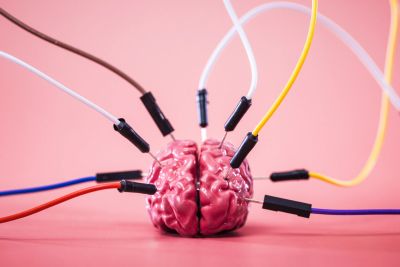
Train Your Brain. Regulate Your Body.
Biofeedback and neurofeedback are evidence-based, non-invasive therapies that help you gain conscious control over your brain and body's automatic functions — without medication. We treat all ages, from children through adults.
A Drug-Free Path to Lasting Change
Unlike medication that manages symptoms, biofeedback and neurofeedback train your nervous system to self-regulate. Using real-time data from your brain and body, our clinicians guide you toward healthier patterns that persist long after treatment ends. We use qEEG brain mapping to personalize every treatment plan.
What Are Biofeedback & Neurofeedback?
Neurofeedback
Neurofeedback (EEG biofeedback) is a form of brain training that uses real-time electroencephalography (EEG) to monitor brainwave activity. Sensors placed on the scalp detect electrical patterns, and you receive instant audio or visual feedback that guides your brain toward more balanced, efficient states. Over time, the brain learns to sustain these healthier patterns on its own.
Biofeedback
Biofeedback measures physiological signals — heart rate variability (HRV), muscle tension (EMG), skin temperature, and breathing patterns — and displays them in real time. By seeing these signals, you learn to consciously influence them. This builds lasting self-regulation skills that reduce stress, anxiety, chronic pain, and more.
qEEG Brain Mapping
Before treatment begins, we conduct a quantitative EEG (qEEG) brain map — a comprehensive assessment of your brainwave patterns compared to a normative database. This allows us to identify dysregulation specific to you and design a targeted neurofeedback protocol rather than a one-size-fits-all approach.
Conditions We Treat
Biofeedback and neurofeedback have strong research support for a wide range of neurological, psychological, and physical conditions.
What a Session Looks Like
Intake & qEEG Brain Map
Your first appointment includes a clinical interview and a qEEG brain mapping session. Sensors are placed on your scalp to record brainwave activity across multiple sites. This map guides your entire treatment plan.
Sensor Placement
At each session, small sensors are placed on your scalp or body (for biofeedback). The process is completely painless and non-invasive — no electricity is sent into your brain or body.
Real-Time Feedback
You watch a screen or listen to audio that responds to your brainwave or physiological activity in real time. When your brain or body moves toward a healthier pattern, the feedback rewards it — reinforcing the change.
Progress Review
Your clinician monitors your data throughout and adjusts protocols as you progress. Sessions are typically 45–60 minutes. Most clients begin noticing changes within the first 10–15 sessions.
Who Is a Good Candidate?
Biofeedback and neurofeedback are appropriate for a wide range of ages and presentations. We treat children, teens, and adults.
Children (Ages 5+)
Particularly effective for ADHD, learning difficulties, anxiety, and autism spectrum concerns. A non-medication option that many families prefer for younger children.
Adolescents
Helpful for academic performance, anxiety, depression, PTSD, and sleep issues. Teens often engage well with the technology-based format.
Adults
Effective for stress, anxiety, PTSD, chronic pain, migraines, TBI recovery, and peak performance. Can be used alongside or as an alternative to medication.
How Many Sessions Are Needed?
Most clients see meaningful results in 20–40 sessions, though this varies by condition and individual response. Some people notice changes within the first 10 sessions; others require more. Unlike medication, the changes from neurofeedback tend to be lasting because the brain has genuinely learned new patterns.
Is It Safe?
Yes. Biofeedback and neurofeedback are among the safest interventions in mental health care. Here are answers to the most common concerns.
Does neurofeedback send electricity into my brain?
No. Neurofeedback only reads electrical activity — it never sends any current into your brain or body. The sensors are passive recording devices, similar to a heart monitor.
Are there side effects?
Side effects are rare and typically mild — some clients report temporary fatigue or vivid dreams after early sessions as the brain adjusts. These usually resolve within 24 hours. Serious adverse effects are extremely uncommon.
Can it be used alongside medication?
Yes. Neurofeedback and biofeedback can be used alongside psychiatric medication. Some clients are eventually able to reduce medication under their prescriber's supervision as their self-regulation improves — but this is always a decision made with their doctor.
Is it evidence-based?
Yes. Neurofeedback has decades of peer-reviewed research supporting its use for ADHD, anxiety, PTSD, TBI, and other conditions. It is recognized by the American Psychological Association and the International Society for Neuroregulation & Research.
How is it different from meditation or mindfulness?
Meditation trains the mind through conscious effort. Neurofeedback trains the brain directly using real-time data, making it effective even for people who struggle with traditional mindfulness practices.
Insurance & Fees
Coverage for biofeedback and neurofeedback varies by insurance plan and diagnosis. We recommend verifying your benefits before scheduling. Our team is happy to assist with the verification process.
Private pay options are available. Please contact our office for current fee schedules and to discuss payment arrangements.
Accepted Insurance Plans
Ready to Explore Neurofeedback?
Schedule a consultation to find out if biofeedback or neurofeedback is right for you or your child. We'll answer your questions and walk you through the process.